EU Market Entry
Strategic Country Selection European Market Entry for Food & Beverage
Strategic Country Selection:
Germany as Your European Gateway
Why 78% of our market entry clients start with Germany rather than France, UK, or other European markets.
Germany isn’t just the largest European food market—it’s the most strategic entry point for international food brands targeting sustained European presence. Here is why:
1. Market size and consumer sophistication
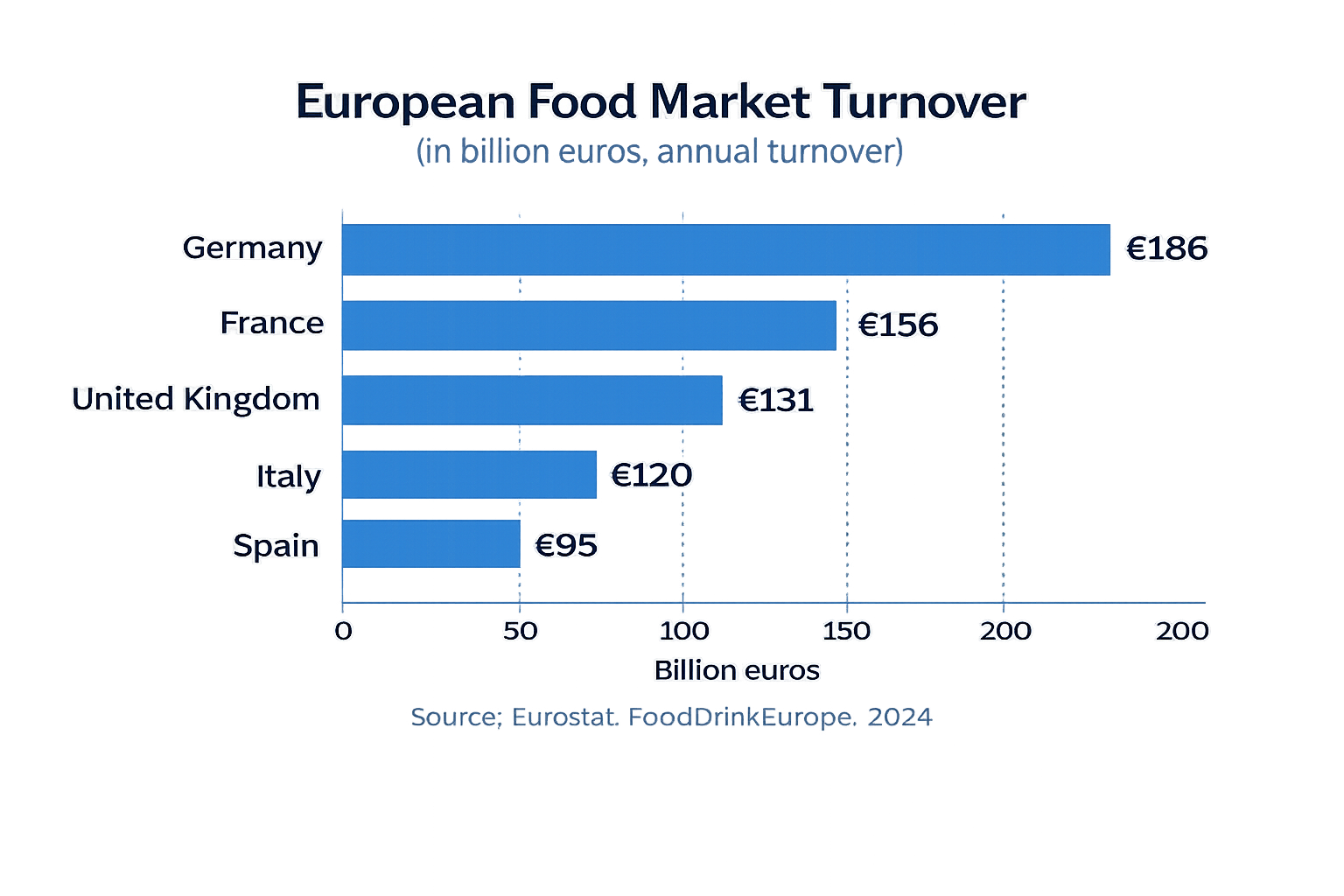
€186 billion annual food and beverage market (BVE 2024)—larger than France (€156B) or UK (£131B). Germany’s 83 million consumers have high purchasing power (€3,200 average monthly disposable income) and strong willingness to pay premium prices for quality, organic, and international specialty foods.
German consumers lead Europe in organic food consumption (€15.3 billion, world’s second-largest organic market after USA) and show strong interest in plant-based products (€1.9 billion market growing 15% annually). This sophisticated, health-conscious consumer base rewards innovation and authenticity.
2. Retail concentration enables efficient market access
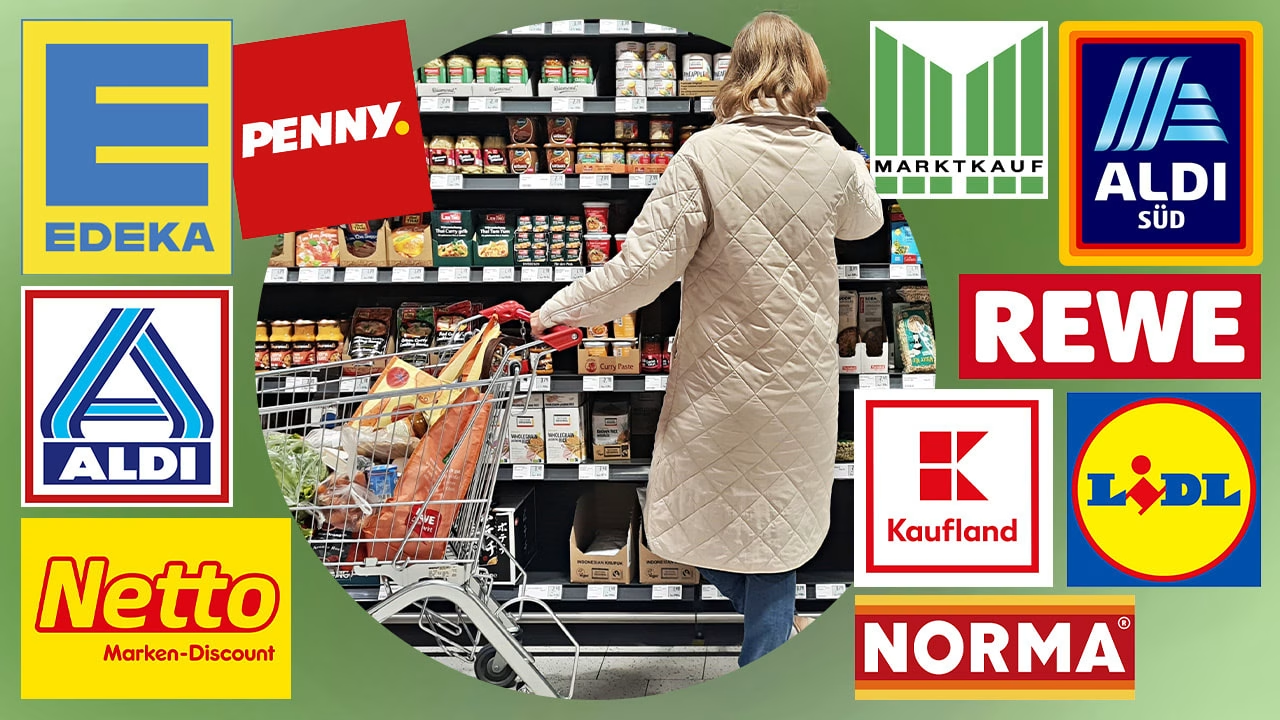
German retail is highly concentrated: REWE (24% market share), EDEKA (20%), Schwarz Group/LIDL (19%), and ALDI (12%) control 75% of the market. Securing listings with 2-3 of these retailers gives you access to 40-50% of the market through relationships with just a handful of key account managers.
Compare to France where the top 5 retailers control only 65% or Italy where fragmentation requires dozens of retailer relationships for comparable reach. Germany’s concentration means faster, more efficient market penetration.


Gateway to neighboring markets
Germany shares borders with 9 countries. Success in Germany provides natural expansion into:
Austria: German language, similar consumer preferences, REWE and EDEKA operate there. Your German distributor often covers Austria with minimal additional investment.
Switzerland: German-speaking region (65% of population), premium market, existing German distributor relationships often extend here.
Netherlands: 2-hour drive from Western Germany, Dutch retailers source from German distributors, shared logistics networks.
Poland and Czech Republic: Growing markets, German distributors serve these markets, German product success translates well.
Regulatory efficiency
German food authorities (BVL, Bundesamt für Verbraucherschutz) set high standards that typically exceed EU minimums. Products approved for German market rarely face additional compliance hurdles in France, Netherlands, or Austria. By contrast, products entering through UK (post-Brexit) or Switzerland (non-EU) require separate compliance for EU access.
Logistics infrastructure
Germany’s central European location and world-class infrastructure (ports in Hamburg and Bremen, airports in Frankfurt and Munich, extensive Autobahn and rail networks) make it the ideal distribution hub. A warehouse in Cologne reaches 180 million consumers in Germany, Netherlands, Belgium, and Northern France within 12 hours.
Distributor availability and quality
Germany has Europe’s most developed specialty food distribution network. Quality distributors exist for every category: organic (Biotropic, Dennree), plant-based (Vantastic Foods), beverages (Savanna, Gourmundo), ethnic foods (Asia Express, Siam Food), and more. This depth of distribution expertise doesn’t exist in most other European markets.
Why Export Food to Germany and Europe? Market Opportunities 2026
European Food Market at a Glance
The European market represents 450 million consumers across 27 EU countries. Germany is the largest food market with €186 billion in annual turnover, followed by France with €156 billion and the UK with £131 billion. The premium food import segment is growing at 5-7% annually, creating significant opportunities for international producers.
Germany serves as the ideal entry point for European expansion. With 83 million consumers and strong purchasing power, it offers access to Europe’s largest retail network including REWE, EDEKA, ALDI, and LIDL. Success in Germany provides proof-of-concept before expanding to France, UK, Austria, and other European markets.
When to Consider Alternative Entry Markets
Enter UK first if:
- You’re a UK-based producer (minimize Brexit complexity)
- Your product has strong British heritage (Scotch whisky, English gin, Welsh lamb)
- You’re targeting Tesco, Sainsbury’s, or Waitrose specifically
- Post-Brexit tariff advantages apply to your product origin
- English language is critical competitive advantage for your team
UK challenges: Post-Brexit complexity (separate compliance, customs), smaller market (£131B vs. Germany’s €186B), less useful as stepping stone to EU (UK success doesn’t facilitate EU expansion).
Enter France first if:
- Your product has French ingredient provenance (truffles, Provence herbs, specific wine regions)
- Ultra-premium positioning (French consumers lead Europe in luxury food spending)
- Organic focus (€13B market, 2nd largest in Europe after Germany)
- You have French-speaking team members or French subsidiary
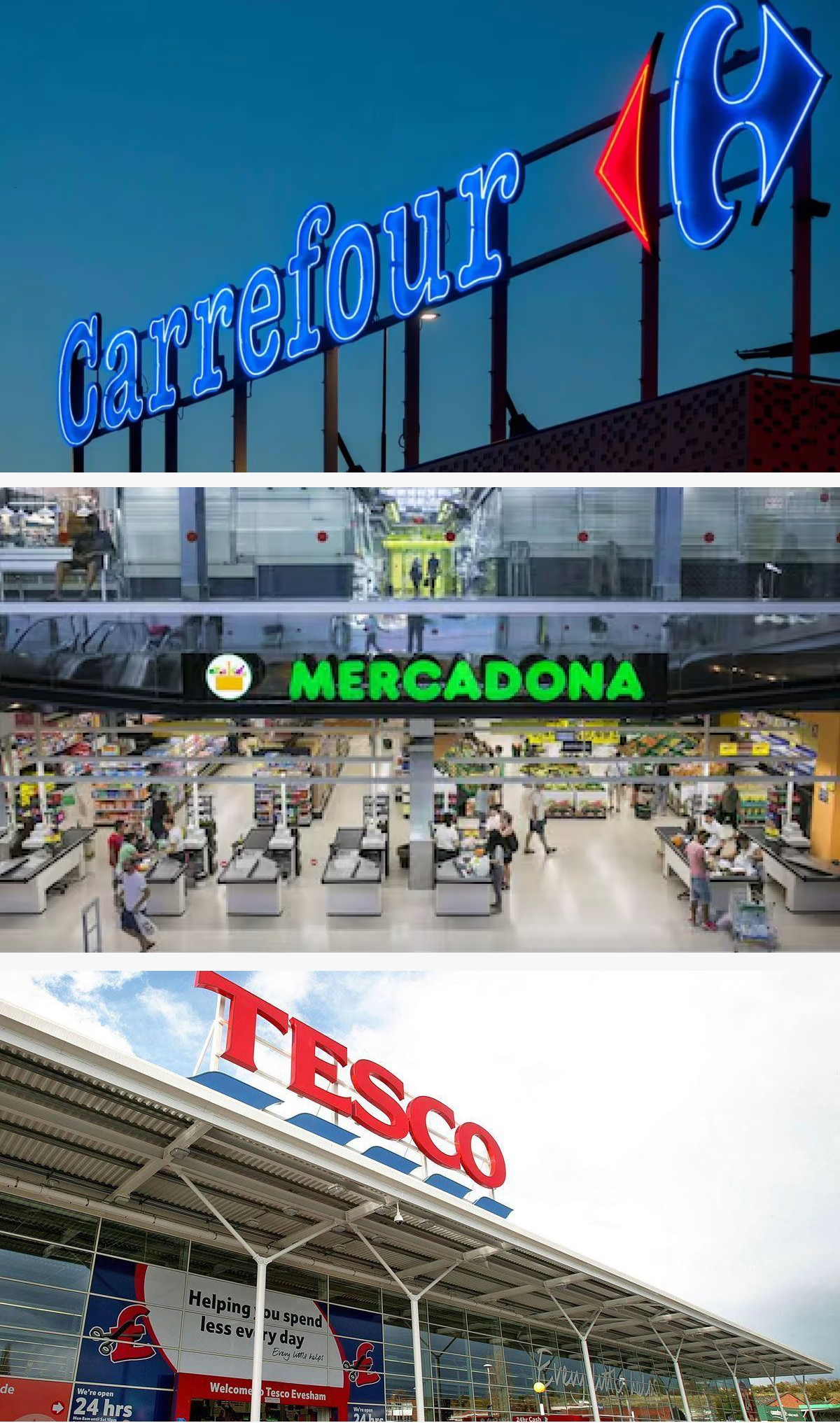
France challenges: “Made in France” consumer preference makes import positioning difficult, Nutri-Score mandatory (requires optimal score for shelf space), higher listing fees (€20,000-€40,000 vs. Germany’s €15,000-€35,000), complex retail structure (Carrefour, E.Leclerc, Intermarché have different requirements).
Enter Netherlands first if:
- Plant-based product (highest per-capita vegan population in EU: 6%)
- Sustainability is core brand pillar (Dutch consumers most sustainability-focused in Europe: 82%)
- Rotterdam port logistics advantage (Asia-origin products)
- Testing ground strategy (small market, low risk, early adopters)
Netherlands challenges: Small market (€52B total, saturated in many categories), success here doesn’t guarantee success elsewhere (Dutch preferences don’t represent broader Europe), Albert Heijn dominance (35% market share) means limited Plan B if they reject you.
How may we support you?
Choose your preferred contact method — we look forward to the conversation.
* Digital Telephone Assistant
If our consultants are not available to take your call in person, an english-speaking digital AI assistant will take your enquiry and respond in natural language, so we can get back to you promptly.
Follow us on LinkedIn

FOOD AND WINE CULTURE Consulting | Part of CLATU Group
30+ years | 500+ projects | Germany, France, UK, Netherlands, Spain
www.clatu.com | www.foodandwineculture.com
Frequently Asked Questions:
Strategic Country Selection for European Market Entry
1. Why do 78% of your clients start with Germany instead of France or UK?
Germany offers the optimal combination of market size, strategic positioning, and efficiency that other European markets cannot match.
Market fundamentals: Germany is Europe’s largest food market at €186 billion (compared to France’s €156 billion and UK’s £131 billion). With 83 million consumers and the highest purchasing power in Europe (€3,200 average monthly disposable income), Germany provides the scale needed for sustainable market entry.
Retail efficiency: Germany’s retail concentration is unmatched in Europe. Just four retail groups—REWE (24%), EDEKA (20%), Schwarz/LIDL (19%), and ALDI (12%)—control 75% of the market. Securing listings with 2-3 of these retailers gives you access to 40-50% of the German market through relationships with a handful of key account managers. Compare this to France, where the top 5 retailers control only 65%, or Italy, where fragmentation requires dozens of retailer relationships for comparable reach.
Gateway advantage: Germany shares borders with 9 countries. Success in Germany provides natural expansion into Austria (German language, same retailers), Switzerland (65% German-speaking, premium market), Netherlands (2-hour drive, shared logistics), and Poland/Czech Republic (growing markets, German distributors serve them). Your German distributor often covers Austria and parts of Switzerland with minimal additional investment.
Regulatory efficiency: German food authorities set standards that typically exceed EU minimums. Products approved for the German market rarely face additional compliance hurdles in France, Netherlands, or Austria. By contrast, entering through UK (post-Brexit) or Switzerland (non-EU) requires separate compliance for EU access.
The result: Germany delivers faster time-to-market, lower complexity, and stronger platform for pan-European expansion than any alternative entry point.
2. When should I consider entering France or UK instead of Germany first?
While Germany is the optimal first market for most food brands, specific circumstances favor alternative entry points.
Enter UK first if:
- You’re a UK-based producer minimizing post-Brexit customs complexity
- Your product has strong British heritage positioning (Scotch whisky, English gin, Welsh lamb, Scottish salmon)
- You’re specifically targeting Tesco, Sainsbury’s, or Waitrose due to existing corporate relationships
- Post-Brexit tariff advantages apply to your product origin country
- English language capability is critical competitive advantage for your team (labeling, customer service, marketing materials)
UK trade-offs: Smaller market (£131 billion vs. Germany’s €186 billion), post-Brexit complexity (separate compliance, customs declarations, Export Health Certificates for animal products), limited gateway function (UK success doesn’t facilitate EU expansion post-Brexit). However, for UK-origin products or brands with British provenance story, these challenges are offset by lower logistics costs and simplified compliance.
Enter France first if:
- Your product features French ingredient provenance (truffles, Provence herbs, Bordeaux wine region, French dairy)
- Ultra-premium positioning where French consumers lead Europe in luxury food spending
- Strong organic focus (€13 billion market, second-largest in Europe after Germany, growing 8% annually)
- You have French-speaking team members or existing French subsidiary
France trade-offs: “Made in France” consumer preference creates headwinds for imported products (73% of French consumers prefer domestic origin), mandatory Nutri-Score labeling (requires optimal A or B score for premium shelf placement), higher listing fees (€20,000-€40,000 vs. Germany’s €15,000-€35,000), complex retail structure with different requirements across Carrefour, E.Leclerc, and Intermarché. France works best when product has inherent French connection or targets ultra-premium segment where origin matters less than quality.
Enter Netherlands first if:
- Plant-based product targeting Europe’s highest per-capita vegan population (6% identify as vegan)
- Sustainability is core brand pillar (Dutch consumers are Europe’s most sustainability-focused at 82%)
- Rotterdam port provides logistics advantage for Asia-origin products
- Testing ground strategy: small market, low risk, early-adopter consumer base
Netherlands trade-offs: Small market size (€52 billion total, saturated in many categories), success here doesn’t guarantee broader European success (Dutch preferences don’t represent wider Europe), Albert Heijn dominance (35% market share) means limited Plan B if they decline listing.
The strategic question: Does your product’s unique characteristics create competitive advantage in France, UK, or Netherlands that outweighs Germany’s structural benefits? For 78% of our clients, the answer is no—Germany’s combination of size, efficiency, and gateway positioning makes it the optimal first market.
3. How does Germany’s location help me expand to neighboring European markets?
Germany’s central European position and retail/logistics infrastructure create natural expansion pathways that don’t exist from peripheral entry points like UK, Spain, or Nordics.
Geographic gateway to 9 border countries:
Austria (direct expansion): German language eliminates localization costs. REWE and EDEKA operate in Austria—your German retail relationships transfer directly. Consumer preferences closely mirror Germany (organic focus, quality orientation, premium willingness). Most German distributors cover Austria as part of their standard territory with minimal additional investment. Timeline: Add Austria 6-12 months after German launch with 10-15% incremental investment.
Switzerland (premium extension): German-speaking region represents 65% of Swiss population. Existing German distributor relationships often extend to Switzerland’s German-speaking cantons. Premium market (highest per-capita food spending in Europe) rewards products proven in quality-focused German market. Compliance: Switzerland follows EU standards closely despite non-EU status.
Netherlands (logistics synergy): 2-hour drive from Western Germany (Cologne/Düsseldorf region). Dutch retailers source from German distributors—your German distribution partner likely already serves Netherlands. Shared logistics networks mean minimal incremental warehousing costs. Progressive consumer base (plant-based, sustainability) aligns with trends driving German organic/plant-based success.
Poland and Czech Republic (emerging markets): Fast-growing Central European markets (GDP growth 4-5% annually). German distributors actively serve these markets—your existing relationship covers expansion. German product success signals quality to Central European consumers. Lower competition than established Western European markets.
Logistics hub advantage:
Germany’s central location and infrastructure (ports in Hamburg/Bremen, airports in Frankfurt/Munich, extensive Autobahn and rail networks) make it Europe’s distribution hub. A warehouse in Cologne or Frankfurt reaches:
- 180 million consumers (Germany, Netherlands, Belgium, Northern France) within 12 hours
- 280 million consumers (adding Austria, Switzerland, Denmark, Poland) within 24 hours
- All major European markets within 48 hours
This is impossible from UK (island isolation, post-Brexit customs), Spain (southwestern peripheral position), or Nordics (northern periphery, limited border access).
Regulatory efficiency cascade:
German food authorities (BVL, Bundesamt für Verbraucherschutz) set standards exceeding EU minimums. Products approved for German market face minimal additional compliance in Austria (same language, similar standards), Netherlands (closely aligned regulations), and France (German compliance typically satisfies French requirements). This regulatory cascade doesn’t work in reverse—products entering through less stringent markets often face additional German requirements.
Distributor network depth:
German distributors maintain the most developed pan-European networks. Quality German distributors typically cover:
- Austria (included in standard territory)
- Switzerland (German-speaking regions)
- Benelux (Netherlands, Belgium, Luxembourg)
- Often Poland and Czech Republic
This multi-country coverage from single distributor relationship doesn’t exist with French, UK, or Dutch distributors, who typically serve only their domestic market.
Strategic implication: Germany as first market creates natural expansion sequence: Germany → Austria (months 6-12) → Switzerland (months 12-18) → Netherlands (months 12-24) → Poland/Czech Republic (months 18-24). This cascading expansion achieves pan-European presence within 24 months using single German distributor relationship and German warehouse location. Alternative entry points require separate distributor relationships, warehouses, and compliance processes for each market—multiplying complexity and cost.
